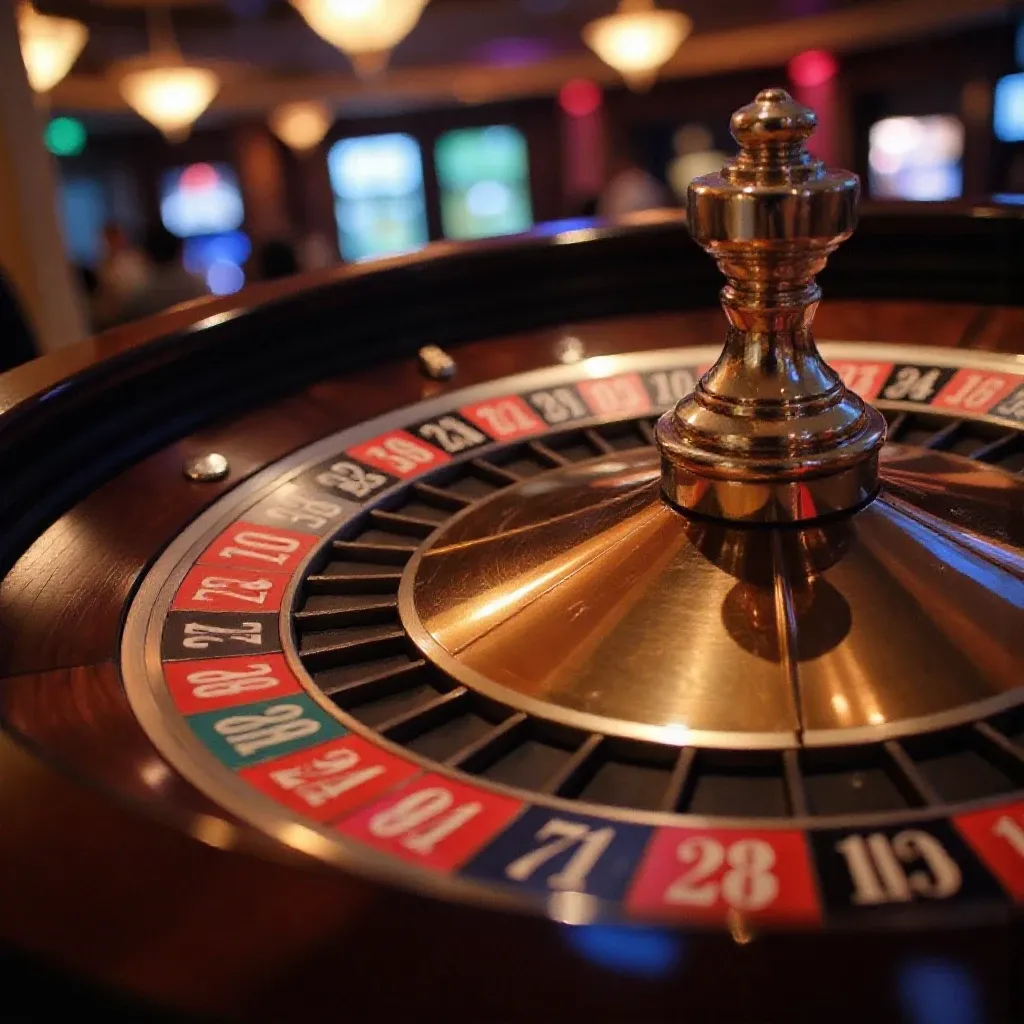
The roulette wheel spins, a blur of red and black, as hopeful players watch with bated breath. It’s a game of chance, a symbol of casinos, and a pursuit that has captivated gamblers for centuries. The question that lingers in the minds of many is: Can you truly beat roulette? The allure of a winning strategy, a secret formula to overcome the house edge, is undeniably strong. I remember the first time I sat at a roulette table, convinced that with the right system I could walk away a winner. I experimented with the Martingale, doubling my bet after each loss, and even tried to track patterns in the numbers. The reality, of course, was far more complex.
While the dream of guaranteed riches is tempting, it’s essential to approach roulette with realistic expectations. The house edge, that inherent advantage the casino holds, makes consistent wins a significant challenge. However, this doesn’t mean that every player is doomed to lose everything. By understanding the odds, employing smart strategies, and practicing effective risk management, players can definitely enhance their overall playing experience and, perhaps, even enjoy some success. The pursuit of beating roulette is less about finding a foolproof system and more about making informed decisions and playing smart.
Understanding Roulette Basics: House Edge & Probabilities
Roulette, a casino game of French origin whose name means “small wheel”, involves players betting on where a small ball will land on a spinning wheel. The wheel is divided into numbered compartments, and after the wheel and ball are spun, the ball eventually comes to rest in one of the compartments. The thrill comes from predicting where that will be. Understanding the rules, the types of bets you can place, and the probability of winning is essential before placing your first chip on the table.
There are two primary versions: American and European roulette. This difference significantly impacts your odds. Before understanding the house edge and probabilities it is crucial to know the types of wagers you can make on the inner and outer parts of the roulette table. Inside bets are placed on specific numbers or small groups of numbers, offering higher payouts but lower odds. Outside bets are placed on larger groups of numbers, such as colors (red or black), odd or even, or number ranges. These bets have lower payouts but a higher probability of winning. Finally, the house edge is calculated based on the wheel’s layout and payouts. It represents the casino’s advantage on each bet. Different roulette variations have different house edges, with European roulette generally being more player-friendly.
American vs. European Roulette: A Crucial Difference
The critical difference between American and European roulette lies in the wheel’s layout. The European wheel has numbers 1 to 36 and a single zero. The American wheel has numbers 1 to 36, a single zero, and a double zero. That seemingly small addition of the “00” dramatically impacts the house edge. The house edge in European roulette is approximately 2.7%. In American roulette, it nearly doubles to around 5.26%.
I remember one time walking into a casino in Vegas, excited to play roulette. Without even looking at the wheel, I put my chips down on my favorite number. After a couple of spins losing all the game, I realized I was playing on an American roulette table! The double zero significantly decreased my odds, and I lost money faster than expected. Since then, I check what kind of roulette I am going to play before placing the first bet, and I recommend you do the same.

Common Roulette Strategies: Myths vs. Reality
Roulette, with its spinning wheel and promise of fortune, has inspired countless betting strategies. Many believe that by following a specific system, they can beat the house. However, the reality is far more complex. Strategies like the Martingale, d’Alembert, and Fibonacci are popular, but they don’t guarantee long-term wins. Let’s break down why.
The Martingale system is perhaps the most well-known. It involves doubling your bet after every loss, with the idea that when you eventually win, you’ll recoup all your losses plus a small profit. For example, if you start with a $10 bet and lose, you bet $20 next. If you lose again, you bet $40, and so on. Sounds foolproof, right? The problem is that casino table limits exist. Eventually, you’ll hit the limit, and you won’t be able to double your bet, wiping out your bankroll. I remember trying this once, feeling like a genius as I doubled my way up… until I hit the table limit after a string of reds. Ouch. The house always wins.
The d’Alembert system is a bit more conservative. Instead of doubling, you increase your bet by one unit after a loss and decrease it by one unit after a win. It’s less risky than the Martingale, but it’s also slower to recover losses – if at all. Imagine starting with a $10 bet, losing, then betting $11, losing again and betting $12. A couple of wins and you are getting $11 and $10 back. But if you get more losses, you’ll quickly see your bankroll vanish.
The Fibonacci system uses the Fibonacci sequence (1, 1, 2, 3, 5, 8, etc.) to determine bet sizes. After a loss, you move to the next number in the sequence to determine your next bet. After a win, you move back two numbers. This strategy is more intricate, but it still relies on the flawed assumption that past spins influence future ones.
Ultimately, these strategies fail because they don’t alter the fundamental probabilities of the game. Roulette is a game of chance, and the house edge (the casino’s advantage) ensures that, over the long run, the casino will always come out ahead.
The Gambler’s Fallacy: Why Past Results Don’t Matter
A critical concept to grasp is the gambler’s fallacy, which is the mistaken belief that if something happens more frequently than normal during a given period, it will happen less frequently in the future (or vice versa). In roulette, this translates to believing that if red has come up five times in a row, black is “due” to appear next. Each spin of the roulette wheel is an independent event. The wheel has no memory. The odds of landing on red or black are the same on every spin, regardless of what happened before. I recall one time at a casino, watching a guy betting heavily on black after a long streak of reds, convinced ithad* to change. He lost a lot of money that night. Probability doesn’t work that way. It’s all randomness.
Refined Strategies: Leveraging Knowledge for Better Odds
Roulette, a game of chance, doesn’t offer foolproof strategies to overcome the house edge. However, employing refined strategies centered around bet selection and meticulous bankroll management can significantly influence the game’s variance. These tactics, while not guaranteeing wins, empower players to navigate the unpredictable nature of roulette with greater control and potentially extend playtime.
Strategic bet selection involves a calculated approach to choosing wagers. While inside bets offer higher payouts, they come with significantly lower probabilities. Conversely, outside bets, such as red/black or odd/even, offer lower payouts but have a much higher chance of success. Focusing on outside chances can be the more savvy choice if one is looking to extend their time at the table, but it’s crucial to remember, this doesn’t change the inherent odds.
For me, a balanced approach has proven most effective in mitigating variance. Combining smaller, safer outside bets with occasional, calculated inside bets allows for sustained gameplay while still offering the potential for larger wins. This approach requires discipline and a clear understanding of probabilities, never chasing losses, but rather adjusting bet sizes based on the overall state of the bankroll.
Bankroll Management: Protecting Your Funds
Effective bankroll management is the cornerstone of responsible roulette play. It’s all about setting clear boundaries and sticking to them, regardless of whether you’re on a winning or losing streak. This involves not only budgeting your funds but also establishing strict loss limits.
Personally, I divide my total roulette bankroll into smaller, manageable units – let’s say 1/5 or 1/10 of the total bank roll – and setting a daily loss limit that I absolutely refuse to exceed. This ensures that you will make it to 5 to 10 potential sittings at the table and gives you a lot more chances to have fun. There’s no fun in losing it all on Day 1. This allows me to preserve funds and prevents impulsive decisions driven by emotion. Once the daily limit is hit, it is what it is, stopping, taking a break, and re-evaluating based on the week objective. This disciplined approach has been what has allowed me to continue enjoying roulette without falling into financial risk.

Managing Risk: A Responsible Approach
Responsible gambling means understanding the odds, knowing your limits, and sticking to them. It’s about treating gambling as a form of entertainment, not a way to make money. Approaching gambling responsibly ensures it remains a fun and harmless activity.
However, gambling can become a problem for some people. Recognizing the signs of problem gambling is crucial for early intervention. Some indicators include:
- Gambling with money meant for bills or necessities.
- Chasing losses, trying to win back what you’ve lost.
- Lying to family and friends about gambling habits.
- Feeling restless or irritable when trying to cut down on gambling.
- Neglecting responsibilities due to gambling.
If you or someone you know is struggling with these issues, it’s essential to seek help. Resources are available to provide support and guidance. Remember, acknowledging the problem is the first step toward recovery. Gambling addiction is a serious issue, and support networks can offer effective strategies for managing and overcoming it.
Conclusion
Roulette, a game of chance and excitement, presents a formidable challenge to those seeking guaranteed winnings. While the allure of beating the system persists, the reality is that the house edge and inherent randomness make consistent success highly improbable. However, this doesn’t diminish the enjoyment and strategic depth the game offers.
Understanding the odds, implementing a well-thought-out strategy, and, most importantly, practicing responsible gambling are crucial for an informed and pleasurable experience. It’s about embracing the thrill of the spin, not chasing elusive riches. As for my perspective on roulette, it has evolved from a naive belief in guaranteed wins to a more nuanced appreciation of its complexities and the importance of responsible play. Ultimately, roulette should be viewed as a form of entertainment, where the goal is to have fun and manage risk responsibly.